Build the team.
Improve the system.
Deliver what matters.
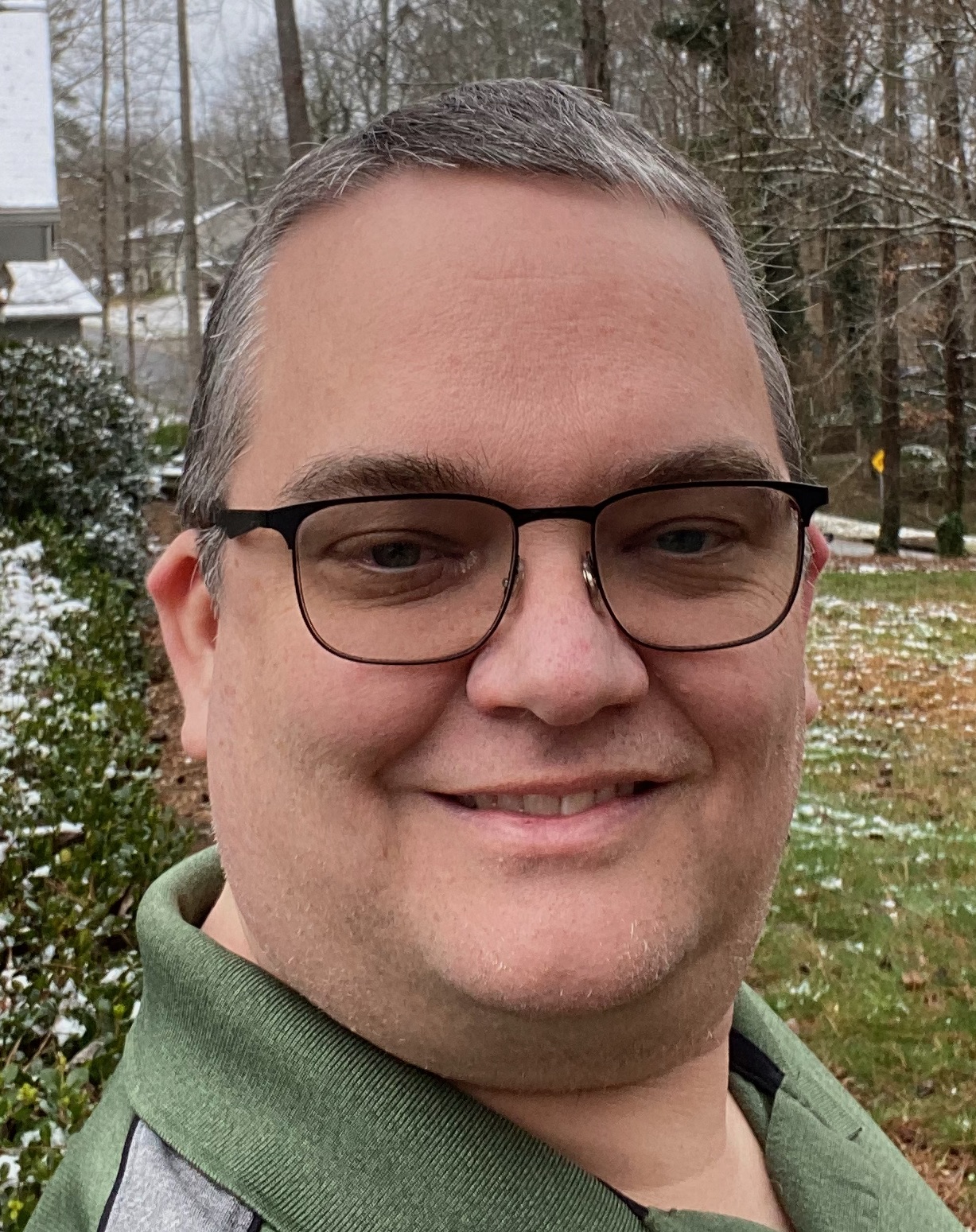
I’m Jim Peters, a software engineering leader connecting business priorities, technical direction, and the people who turn ideas into working products.
Currently Senior Director of Software Development at Hy-Tek Intralogistics, leading AI-assisted engineering and enterprise modernization.
Faster implementation is useful when the resulting system is understandable, testable, and maintainable. My focus is building the practices that make that possible.
01 / ENGINEERING PRACTICE
Specifications before implementation
Requirements, architecture constraints, coding standards, and quality expectations guide AI-generated implementation. Engineers design, refine, review, and validate the work.
Approximately 90% Claude Code adoption across engineering, with 60% of engineers reporting increased code output.
02 / MODERNIZATION
A working WES pilot
Three contributors developed a working Warehouse Execution System pilot in about 100 combined hours of part-time effort. The architecture uses C#/.NET, NATS, SQL Server, and an event-driven modular monolith.
Specification-to-code traceability and subsequent validation with more than 1,500 integration tests and 4,000 unit tests support the evaluation.
03 / CUSTOMER DELIVERY
One codebase, ten planned sites
Leading a customer WES program connecting robotic automation and manual material movement, with operator workflows, supervisor tools, and KPI reporting.
The first two distribution centers were in go-live testing as of September 2026.
AI adoption and pilot evidence reflect September 2026 updates. The modernization pilot is separate from the customer deployment program.
CAREER
Leadership grounded
in delivery.
From clinical workflows and fraud-risk platforms to warehouse automation, I help teams navigate complex systems and deliver useful software.
January 2026 - Present
Hy-Tek Intralogistics
Senior Director of Software Development
Lead AI transformation, enterprise development maturity, and customer software delivery. Directly manage 15 technical architects, developers, and DevSecOps engineers; report to the Vice President of Software Development and control an approximately $150,000 annual cloud services budget, primarily Azure.
Selected contributions
Established a structured AI-assisted development lifecycle centered on requirements, design documentation, architectural constraints, coding standards, test requirements, and validation in the CI/CD pipeline. Engineers own design, specification refinement, reviews, and validation of AI-generated implementation.
Reassessed the economics and maintainability of a legacy N-tier platform spanning VB6, C++, ASP.NET, and C#. Presented a replacement strategy that balances investment in AI tooling and engineering time against ongoing maintenance costs and the deployment risk of a new system.
Lead delivery of a WES intended to use one software codebase across 10 customer distribution centers. Coordinate approximately 10 developers; the first two sites were in go-live testing as of September 2026.
Improved CI/CD feature packaging and release versioning, then partnered with QA to establish virtual development, QA, and professional-services environments for staging releases before production.
August 2022 - January 2026
Vanderlande
Senior Manager, Software Development
Led engineering and product-support teams for next-generation warehouse execution software and legacy products across North America and Europe. Earlier remit included five teams, one manager, and 30 engineers; scope later changed to two teams with one manager and eight engineers or QA staff.
Selected contributions
Improved deployment reliability and software quality through rigorous change management, repeatable deployment checklists, and refactoring that made development and testing more automation-friendly. Outcomes included more deployments without rollback and fewer post-deployment defects.
Led development of a common library that standardized logging, security, message eventing, and other system functions through abstractions with swappable service providers. Advanced architectural consistency across 26 functional teams through shared standards and collaborative agreement.
Directed development of a host communications gateway using Enterprise Integration Patterns and Spring Integration. Configurable, dynamic, bidirectional message transformation between host systems and the WES reduced dependence on application developers for integration changes.
January 2022 - July 2022
Sunday
Director of Engineering
Led two managers and 25 engineers across three teams in Europe and North America for a payments startup. Directed architecture, engineering practices, recruitment, and team development for a B2B operations and customer-onboarding dashboard.
Selected contributions
Recruited, onboarded, and trained six engineers in four months, expanding the US engineering organization and integrating new hires into active delivery teams.
Accelerated feature delivery by improving requirements refinement and developer understanding, then strengthening coding, testing, and validation practices. Tracked cycle time from the product owner's feature request through production deployment.
Partnered with product management and operations to evaluate metrics and customer feedback and prioritize valuable client-onboarding capabilities.
January 2019 - January 2022
Feedzai
Senior Director of Software Engineering
Led a global technical services organization of seven managers and 120 software engineers and contractors across the US, Europe, Australia, and Hong Kong. Reported to the Senior Vice President of Customer Success and owned a $15M annual organization budget covering staffing, AWS services, software licensing, and hardware.
Selected contributions
Directed delivery of customized hosted and on-premises AI fraud-risk scoring solutions for major financial institutions, translating customer implementation requirements into coordinated engineering and support work.
Doubled the technical services organization in 18 months and supported larger, more complex customer engagements during a period when company revenue grew 500%. Managed staffing growth alongside expanding delivery requirements.
Reorganized individual project teams into shared resource teams, allowing capacity to move across projects. Standardized processes and shared knowledge reduced disruption when engineers joined or left and improved delivery performance, project costs, and release quality.
February 2016 - January 2019
Honeywell
Senior Manager, Software Development
Expanded leadership from one legacy-application team to five US and India Scrum teams with 27 developers. Scope included a pick-to-light software/hardware product and the flagship Warehouse Execution System.
Selected contributions
Earned broader responsibility through results with the initial team, consolidation of engineering leadership, and organizational growth that added two newly hired teams.
Rebalanced skills and capabilities across previously uneven teams. Improved work planning and alignment with product ownership, increasing feature delivery and reducing sprint rollover.
Aligned Scrum practices across US and India teams to support consistent delivery management and organization-wide development dashboards.
February 2014 - February 2016
Cox Media Group
Manager, Software Development
Managed four US-based teams totaling 30 people delivering digital newspaper capabilities in a Python/Django content management system.
Selected contributions
Built two fully remote teams within six months and recruited 12 engineers. Participated in sourcing, conducted second-round interviews after HR screening, and selected candidates to advance to engineering interviews.
Onboarded new engineers into their teams and assignments, establishing the context and guidance needed to contribute to active development work.
Led delivery of web-based digital newspaper features and content capabilities for the group's first internally developed native mobile application on iOS and Android, improving the experience beyond a contracted content-wrapper approach.
February 2010 - February 2014
Surgical Information Systems
Manager, Software Development
Combined engineering leadership, architecture, product management, and hands-on development for SISCom, a surgical patient tracking and status product used in 40 hospitals. Managed three engineers across the US and India.
Selected contributions
Guided a system of digital boards displaying near-real-time surgical patient status and pre- and post-operative needs across multiple departments, connecting clinical workflows to usable information.
Modernized the Java software stack, replaced Flash-driven displays with HTML5, and separated the data service from the core SIS application to improve collection from external services and systems.
Introduced Maven and Jenkins build automation, improving development capability and quality while reducing build time.
1999 - 2010
Earlier foundations
At Surgical Information Systems, progressed from Implementation Engineer to Technical Services Manager, leading seven engineers and DBAs with a $2M annual budget. Previously developed medical provider-network and pricing software at Globalcare.
HOW I LEAD
Give people the opportunity
to become more than they were.
I see myself as a trainer and coach. That means listening, matching people to work where they can contribute, building decision-making confidence, and preparing future leaders. Some of my most rewarding work is the mentoring that continues long after we stop sharing an employer.